01What is ECU Chiptuning?
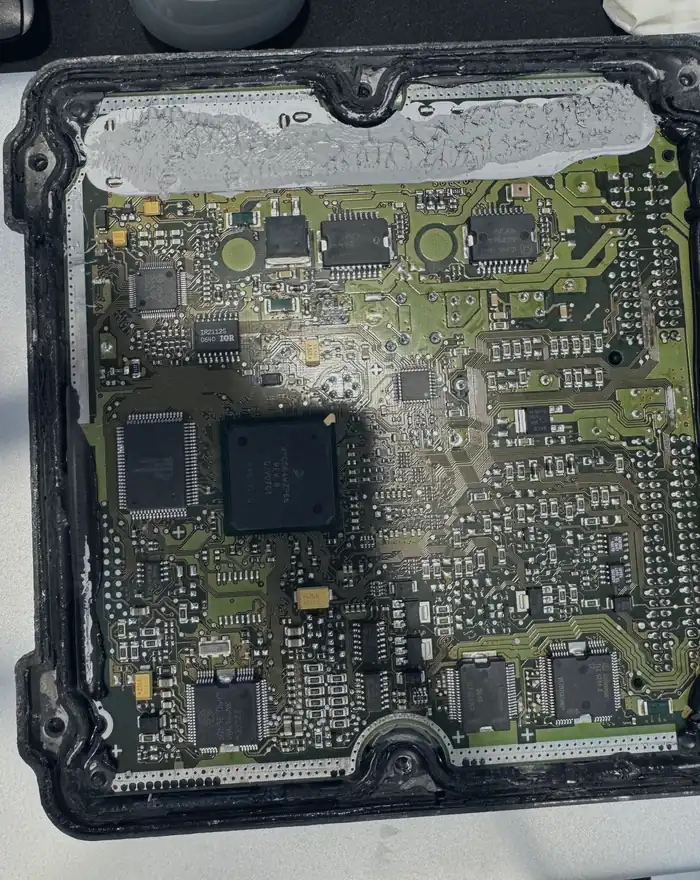
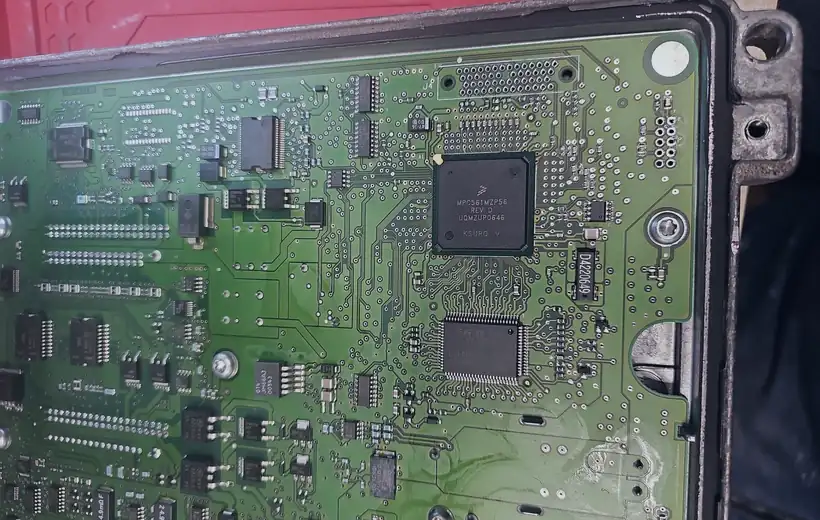
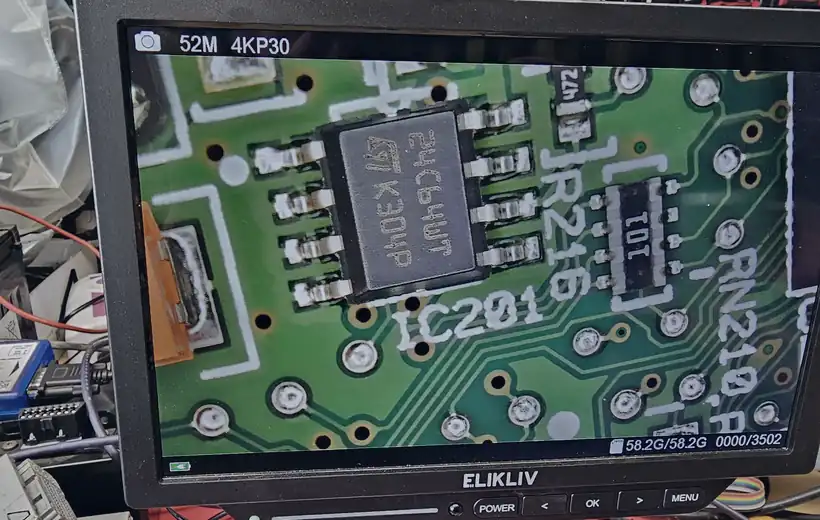
ECU Chiptuning is the optimization of the engine control unit (ECU) software. The ECU is read out and selectively optimized. While in the past a physical intervention on the control unit (e.g. EPROM desoldering) was often necessary, programming today is done in most cases directly via the OBD, Bench or Boot interface. Relevant maps such as injection quantity, boost pressure, rail pressure, torque limitation and ignition timing are individually adjusted to optimize power, torque or efficiency.
02How does the File Service work?
Upload your original ECU file, select your desired tuning options (e.g. DPF Off, EGR Off, Stage 1), pay via PayPal and download the optimized file immediately. The entire process usually takes less than 120 seconds.
03What tuning options do you offer?
We offer a wide range of options: DPF Off, EGR Off, AdBlue/SCR Off, Lambda/O2 Off, Speed Limiter Off, Start/Stop Off, Pop & Bang, Stage 1 Tuning, Stage 2 Tuning, DTC Removal, GPF/OPF Off, NOx Off, Swirl Flaps Off, Cold Start Noise Reduction, Torque Monitoring Off, Hardcut Limiter, Exhaust Overrun, Gear Calibration, Idle Speed Adjustment, Kickdown Off and more.
04What file formats are supported?
We accept original ECU files in .bin format. The file must be the unmodified original so that we can ensure a clean and safe modification.
05How much does a tuning file cost?
Pricing depends on the tuning options you select. Each option has a fixed price displayed during the configuration step. You can combine multiple options in a single order. The total is shown before payment so there are no hidden fees.
06What payment methods do you accept?
We currently accept PayPal. PayPal allows you to pay with your PayPal balance, linked bank account, or credit/debit card — so you do not need a PayPal account to complete your purchase.
07How long until I receive my modified file?
The process is fully automated. After payment, your modified file is generated and ready for download within seconds. No waiting for manual processing.
08Is the service available 24/7?
Yes, our file service is fully automated and available 24 hours a day, 7 days a week, including weekends and holidays. You can upload, pay and download at any time.
09What are Stage 1 and Stage 2 tuning?
Stage 1 is a performance optimization using only software changes — no hardware modifications are needed. It typically increases power by 20–30% on turbocharged engines. Stage 2 goes further and may require supporting hardware modifications such as a sports exhaust or upgraded intercooler for optimal results.
10How much power gain can I expect?
Gains depend on your vehicle and engine type. Turbocharged diesel engines typically see 20–30% more power with Stage 1. Turbocharged petrol engines gain 15–25%. Naturally aspirated engines see smaller gains of around 5–10%. Exact figures vary by vehicle.
11Can chiptuning improve fuel consumption?
Yes. Especially on diesel engines, chiptuning can reduce fuel consumption by 5–15% because the engine runs more efficiently. The key is driving normally — if you use the extra power aggressively, fuel consumption may increase instead.
12What vehicles do you support?
We support a wide range of vehicles including passenger cars, vans, trucks, agricultural machinery, construction equipment and boats. Both diesel and petrol engines are covered. If you are unsure whether your vehicle is supported, contact us.
13Is tuning safe for my engine?
Yes, our tuning files are professionally created and remain within safe parameters. All modifications are carefully tested for reliability and durability. The engine, gearbox and other components are not pushed beyond their design tolerances.
14Can I revert back to the original software?
Yes, it is generally possible to revert a tuned file back to the factory state. For this, either the original vehicle file (ORI file) or a matching factory reference is required. Always keep your original ECU file as a backup. You can flash the original file back onto the ECU at any time to restore factory settings.
Please register in our partner portal to submit a restoration request:
login.fileservice24.eu. Our team will check the ECU and create a suitable factory restoration if needed.
15Does chiptuning void my manufacturer warranty?
Manufacturers may void engine-related warranty claims if they detect modified software. However, tuning can be reversed before a dealer visit. Warranty policies vary by manufacturer and country, so check your specific situation.
16Is chiptuning detectable by the dealer?
Modern diagnostic tools used by dealers can potentially detect that the ECU software has been modified. Some manufacturers log flash counters or software version numbers. Reverting to the original file reduces the chance of detection, but cannot guarantee it.
17Is chiptuning legal?
Legality varies by country. In many European countries, chiptuning is legal for off-road or motorsport use. For road-legal use, some countries require the modification to be registered and approved (e.g. TÜV in Germany). Always check your local regulations before tuning.
18Will my car pass emissions testing (MOT/TÜV) after tuning?
Performance tuning (Stage 1/2) generally does not affect emissions test results. However, removing emission components like DPF, EGR, AdBlue or catalytic converters will cause the vehicle to fail emissions testing in most countries. These options are intended for off-road and motorsport use.
19Does chiptuning affect my insurance?
In most countries, you are required to inform your insurance company about any engine modifications. Failure to disclose modifications could void your insurance coverage in the event of a claim. Contact your insurance provider to check their policy on chiptuning.
20Do I need hardware modifications for tuning?
Stage 1 tuning is purely software-based and requires no hardware changes. Stage 2 may require a performance exhaust, upgraded intercooler or other supporting modifications depending on the vehicle. The recommended hardware is usually listed for each tuning stage.
21What if there is a problem with my tuning file?
If you experience any issues with your modified file, contact us immediately via WhatsApp or email. We offer support and corrections free of charge. Your satisfaction and vehicle safety are our top priority.
22Which ECU reading tools are compatible with your service?
Our service accepts standard .bin files from all major ECU reading/writing tools. Compatible devices include:
Alientech – KESS3 (OBD, Bench & Boot), KESSv2, K-TAG
Autotuner – Autotuner (OBD, Bench & Boot, no subscription)
Magic Motorsport – Flex (OBD, Bench & Boot), MAGPro2 X17
CMD Flashtec – CMD Flash (OBD, BDM & Boot)
DIMSport – New Genius (OBD), New Trasdata (Bench, BDM, Boot & JTAG)
bFlash – bFlash (OBD, Bench, Boot & Flexray, specialised in Bosch MD1/MG1)
HP Tuners – MPVI2, MPVI3 (OBD, primarily US/Asian vehicles)
Scanmatik / PCMFlash – PCMFlash (OBD & Bench, module-based)
PCMTuner – PCMTuner (OBD, Bench & Boot, 67 modules)
BitSoftware – BitBox (OBD read/write via J2534 Tactrix OpenPort)
EcuTek – ProECU (OBD, specialised in Subaru, Nissan, Mazda, Toyota)
Byteshooter – Byteshooter (Bench & Boot, TriCore/Renesas focus)
EVC Electronic – BDM100, BSL100 (Bench & Boot)
Piasini – Piasini Engineering Serial Suite (OBD, BDM & Boot)
MPPS – MPPS V18/V21 (OBD & Bench, budget option)
Galletto – Galletto V54 (OBD, BDM, entry-level)
FGTech – FGTech Galletto V54 (OBD, BDM & JTAG)
I/O Terminal – I/O Terminal Multitool (Bench & Boot, PSA/VAG/BMW specialist)
Frieling Racing – fOBD (OBD, specialised in BMW/Mini)
Simply read the original ECU file with any of these tools, upload the .bin file to our service, select your desired tuning options, and flash the modified file back to the ECU with the same tool. Always keep a backup of your original file.
23Which ECU manufacturers and models are supported?
Our service supports a wide range of ECU families from all major manufacturers. As long as you can provide a valid .bin dump, we can process it. Supported ECU families include:
Bosch
EDC15 · EDC16 · EDC17 (C06, C08, C18, C19, C41, C46, C49, C50, C53, C56, C57, C58, C59, C60, C64, C66, C69, C70, C73, C74, C79, C83, CP02, CP09, CP14, CP20, CP44, CP45, CP48, CP52, CP74, CV54, U01, U05, U31) · ME7 (ME7.1, ME7.5, ME7.8) · ME9 (ME9.0, ME9.1, ME9.7) · MED9 (MED9.1, MED9.5) · MED17 (MED17.1, MED17.5, MED17.8) · MEVD17 (MEVD17.2, MEVD17.9) · MG1 (MG1CS001, MG1CS002, MG1CS003, MG1CS024, MG1CS049, MG1CS111, MG1CS201) · MD1 (MD1CP001, MD1CP002, MD1CP004, MD1CP012, MD1CP032, MD1CS001, MD1CS004, MD1CS006) · MDG1 · MSA · MSE · MS6 · DCU17
Continental / Siemens VDO
SID (SID201, SID206, SID208, SID209, SID213, SID301, SID305, SID310, SID321, SID803, SID804, SID807) · Simos (Simos 6.x, 7.x, 8.x, 10.x, 12.x, 15.x, 18.x, 19.x) · SIM2K · PCR2.1 · EMS (EMS3110, EMS3120, EMS3125, EMS3130, EMS3132, EMS3150) · MSS (MSS54, MSS60, MSS65, MSS70) · MSD (MSD80, MSD81, MSD85, MSD87) · SDI · ACM · M3C · SIM271 · SIM2K-250
Delphi
DCM (DCM3.2, DCM3.4, DCM3.5, DCM3.7, DCM5, DCM6.1, DCM6.2, DCM7.1, DCM7.1A) · DDCR · MT05 · MT80 · DCU101 · DCU102 · DCU105
Denso
Diesel Gen1 · Diesel Gen2 · Diesel Gen3 · Diesel Gen4 · Petrol Gen1 · Petrol Gen2 · Petrol Gen3 · Petrol Gen4 · SH7058 · SH7059 · SH72531 · SH72543 · SH72544 · SH7055 · 276700-xxxx series (Toyota/Lexus) · 112600-xxxx series (Mazda)
Magneti Marelli
MJD (MJD6F3, MJD6JX, MJD6O2, MJD8F2, MJD8F3, MJD9DF) · IAW (IAW4HV, IAW5AF, IAW5AM, IAW5SF, IAW5SM, IAW6LP, IAW7GF, IAW10GF) · BCE · BCM
Motorola / Freescale / NXP
MPC5xx (MPC555, MPC556, MPC561, MPC562, MPC563, MPC564, MPC565, MPC566) · MPC5xxx (MPC5534, MPC5553, MPC5554, MPC5565, MPC5566, MPC5567, MPC5674, MPC5777) · NGC3 · NGC4
Infineon TriCore
TC17xx (TC1724, TC1728, TC1738, TC1766, TC1767, TC1782, TC1793, TC1797) · TC2xx (TC2D5, TC222, TC233, TC264, TC265, TC275, TC277, TC298, TC299)
Renesas
SH7055 · SH7058 · SH7059 · SH72531 · SH72543 · SH72544 · SH725xx · RH850 (RH850/C1H, RH850/C1M, RH850/P1M)
Hitachi
BED (Nissan GT-R) · Various Nissan/Infiniti ECMs and TCMs
Cummins
CM850 · CM2150 · CM2250 · CM2350 · CM2450
ZF (Transmission / TCU)
ZF 6HP · ZF 8HP (Gen1, Gen2, Gen3) · ZF 9HP · DQ200 (DSG7) · DQ250 (DSG6) · DQ381 · DQ500 · PDK (PDK1, PDK2) · Getrag 6DCT · 7G-Tronic · 9G-Tronic
Temic / Continental TCU
VGS (VGS1, VGS2, VGS3) – Mercedes · ISM · EGS
ACDelco / GM
E37 · E38 · E39 · E40 · E67 · E78 · E80 · E92 · E98 · T87A
Keihin
Honda/Acura ECU families (SH7055, SH7058 based)
Jatco (Transmission / TCU)
JF011E · JF015E · JF016E · JF017E · RE5R05A · 7AT (Nissan/Infiniti)
Visteon
Ford EEC-V · EEC-VI · DCU series
Sagem / Johnson Controls
S2000 · S3000 · PSA (Peugeot/Citroën) ECU families
Valeo
J34P · V46 · Valeo-Siemens PSA families
Mitsubishi Electric
Melco CVT · Mitsubishi/Chrysler ECU families
This list covers the most common ECU families found in passenger cars, vans, trucks, agricultural machinery, construction equipment and marine engines. If your ECU model is not listed, contact us — we may still be able to process your file.
24How can I read the ECU data?
Professional programming and flash tools are required to read the ECU data. Depending on the vehicle and control unit, the ECU data can be read via different access methods:
OBD (On-Board Diagnostics) – Direct access via the vehicle's diagnostic port
Bench Mode – Access on the removed control unit without opening the housing
Boot Mode – Direct access to the processor on protected control units
Which method is required depends on the installed control unit (e.g. Bosch EDC17, MD1, MG1 etc.) and the vehicle model. Since not every device supports all control units or access methods, we are happy to advise our partners on choosing a suitable solution.
25Which programming devices are recommended?
The choice of the right tool depends on several factors:
ECU type – e.g. Bosch MD1 / MG1 / EDC17
Access method – OBD, Bench, Boot
Vehicle coverage
Budget
We offer both entry-level solutions and professional systems for daily workshop use. Since no single tool supports 100% of all control units, individual consultation is recommended.
26Are the tuning files created manually?
Our standard files are based on tested and extensively validated calibrations. The creation is performed in a structured manner using specially developed WinOLS processes (including LUA-based automations) to ensure consistently high quality and reproducibility. Each file is based on validated map adjustments and is technically verified.
27Is chiptuning removed after a dealer software update?
Yes. If an official software update is performed on the engine control unit at an authorized dealer, the existing tuning software is typically overwritten and the vehicle returns to the factory state of the new software version.
Please note: After a software update, it is often not possible to re-flash the previously created tuning file, as the software version has changed. In this case:
• The new original file must be read out again
• The current software version must be submitted to us
• A new, matching optimization must be created
We therefore recommend having the current software version checked after every manufacturer update.
28Is there a custom ECU file service with support?
Yes. In addition to our standard files, we offer an individual ECU file service with personal support. Each file is analyzed and adapted on a vehicle-specific basis. Additionally, logfile analysis, re-optimizations and technical support are available.
Registration for this service is available at:
login.fileservice24.euPlease note that prices for individual calibrations differ from the standard file service, as additional analysis and support effort is taken into account.
29Who is Fileservice24?
Fileservice24 is a specialized B2B ECU file service for workshops and tuning businesses in Austria and the DACH region. Behind Fileservice24 is a trained automotive technician with many years of experience in engine control, map optimization and vehicle technology. The focus is on professional, technically clean ECU calibrations for commercial partners.
30Do you have the trade authorization for map optimizations?
Yes. The activity is carried out within the framework of trade law and is based on professional qualifications in the automotive sector. Fileservice24 works exclusively in the B2B segment with workshops and specialist companies.
31What is a checksum?
A checksum is a mathematical verification value within the ECU software. It is used to ensure the integrity of the data. The engine control unit uses the checksum to verify that the stored data is complete and unaltered.
If maps or software areas are modified (e.g. through a performance optimization), the checksum must be recalculated accordingly. If the checksum is incorrect, the control unit may:
• not start the vehicle
• enter limp mode
• or generate a fault code entry
Modern flash and programming tools usually calculate the checksum automatically during the writing process.
32Is the checksum adjusted in the tuning files?
The checksum is usually calculated and corrected automatically by the flash or programming tool being used. Modern programming devices handle the correct checksum calculation during the writing process, ensuring safe flashing.
Please note that the checksum correction function depends on the specific tool and ECU. It is therefore important to use a professional and up-to-date programming device.
33What is DTC Clear and how does it work?
DTC Clear automatically identifies and removes all Diagnostic Trouble Codes (DTCs) from your ECU file. After uploading your file and selecting the DTC Clear option, our system automatically identifies your ECU, detects all active DTCs, and generates a modified file with those codes switched off. The process is fully automated and typically completes within seconds.
34How can I contact you?
You can reach us via WhatsApp at
+43 664 402 15 71 or by email at
[email protected]. You can also use our
contact form.